K.K. Orchard, a Two-Year European Market-Entry Experiment for a Taiwanese Frozen Food Producer
Two-year market-entry experiment (2021 to 2022) built to make supply and demand meet: LinkedIn account-based campaigns aimed at frozen-food category managers to support direct business development, and per-country Google, Facebook and Instagram campaigns in 13 languages that narrowed to city level once retail contracts landed.
Challenge
K.K. Orchard, a Taiwanese frozen food producer, had no European presence, a limited budget, and two audiences to reach at once: the category managers at retail chains who decide what goes on the shelf, and the consumers who have to pick it up once it is there.
Approach
- B2B first: LinkedIn campaigns targeting frozen-food category managers at retailers, run as light account-based marketing so the business developer's personal outreach landed on people who had already seen the brand
- Per-country Google Ads, Facebook and Instagram campaigns with localised content in 13 languages, budget allocated across markets by response
- Hyperlocal switch: once a retail contract landed, consumer targeting narrowed from the country to the city and the proximity of the listed stores
- Culturally adapted creative per market rather than one master asset with swapped copy
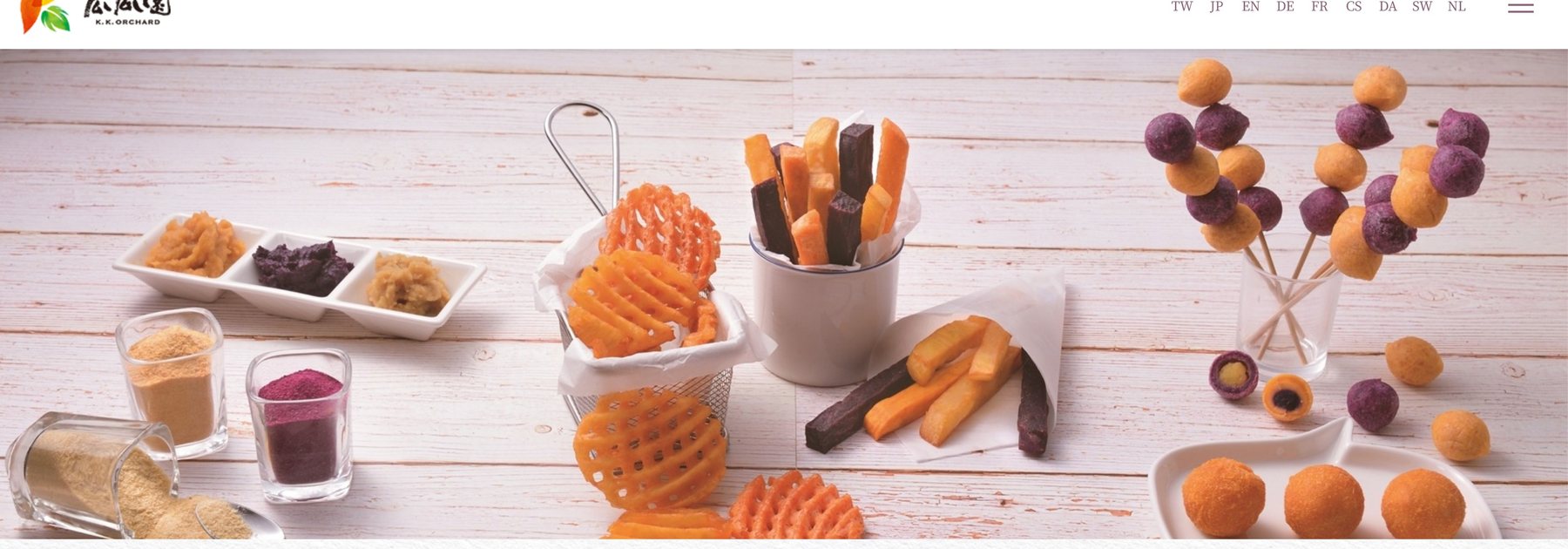
- Audience learning on Meta: new parents and fitness and health audiences were tested against each other per market to find who engaged most with a healthier option, the sweet potato fries. Parents won, so the creative doubled down on families celebrating festivities with the fun, colourful fries
Results
"What we learned: for a food producer entering Europe, the shelf decision is B2B, and the listings came from category managers who had seen the brand on LinkedIn before a person reached out to them. The second lesson is the one we cite most. Marketing can prove demand exists; it cannot fix unit economics. Running the entry as a time-boxed experiment meant the product and price question got a real answer in two years instead of a slow bleed over five."
More Case Studies

For Valor, Reaching C-Suite Executives via LinkedIn
Three-week sprint targeting CEOs and C-suite at Top 900 Dutch companies through their executive assistants, validating a niche B2B LinkedIn approach.

TNT/FedEx, Culturally Adapted Google Ads Across 3 Countries
ADAPT Framework applied to Google Ads copy across the Netherlands, Portugal, and Singapore. Cultural adaptation tested A/B against an unadapted control in each market.

Gladskin by Micreos, One Letter That Tripled a German Market
Per-market keyword research and content localisation across the UK, France, the Netherlands and Germany. In German, the product category has two correct spellings with very different search volumes, and the site was built on the smaller one.
Ready to Write Your Own Case Study?
Let's discuss how we can help your brand achieve real, measurable growth across European and East Asian markets.